Open: Sat 1:00 PM - 4:00 PM


$839,900
Active
5
Beds
5
Baths
3192
Sqft
0.26
Acres
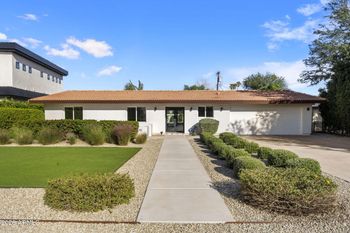
3238 E Mountain Village Cir, Phoenix, AZ 85042
MLS#: 7097099


After 25 years of Phoenix real estate transactions, here's what I wish I'd been telling clients from the beginning.
A standard home inspection covers a lot of ground — roof, HVAC, electrical, plumbing fixtures, foundation. It's thorough. It's important. And it has a blind spot that most buyers don't find out about until months or years after closing.
The sewer line.
In 25 years of Phoenix real estate, I have watched buyers do everything right — careful search, smart offer, full inspection — and then get hit with a $5,000 to $20,000 sewer repair that nobody saw coming. Not the inspector, not the seller, not me. Because nobody looked.
That's changing. A sewer scope inspection is a simple, inexpensive procedure that gives you a camera's-eye view of the sewer line running from your home to the city main. It takes about an hour. It costs a fraction of what repairs do. And it tells you something a standard home inspection simply cannot.
I now recommend it to every buyer I work with. I also recommend it to homeowners who have never had one — because your sewer line doesn't care whether you bought the house last year or fifteen years ago.
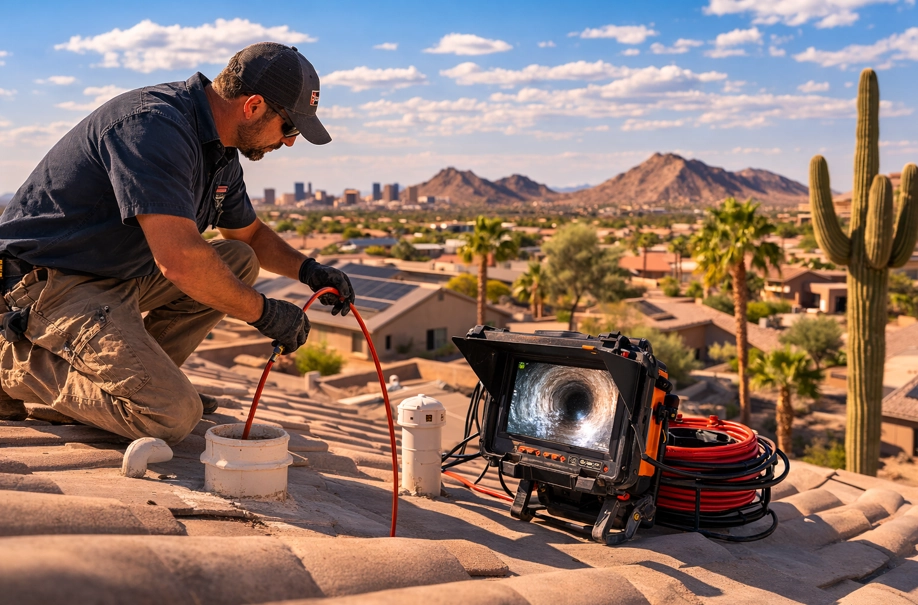
A licensed plumber inserts a small waterproof camera into your sewer clean-out access point and runs it through the entire line — from the house to where it connects to the city sewer system. The camera transmits live video so the technician can see exactly what's inside the pipe in real time.
They're looking for:
• Root intrusion — tree roots are the most common cause of sewer line damage in Phoenix
• Cracks, fractures, or collapsed sections of pipe
• Buildup of grease, scale, or debris that's narrowing the line
• Belly sections — low spots where the pipe sags and waste collects
• Offset joints where pipe sections have shifted out of alignment
• Deterioration in older clay or cast iron pipes
The whole inspection is recorded on video. You get to see exactly what's there — or what isn't — before any money changes hands or any repairs become emergencies.
This is the question I get most often, and it's a fair one. If you're already paying for a thorough home inspection, why isn't the sewer line covered?
The honest answer: a standard home inspection is a visual inspection of accessible components. The inspector flushes toilets, runs water, checks drainage. They're looking for slow drains or signs of backup. What they cannot do is see inside a pipe that's buried three to six feet underground running from your house to the street.
A pipe can drain perfectly fine right now and still have a root intrusion that's 40% of the way to a full blockage. A belly section can exist for years before it causes a backup. A hairline crack in a clay pipe can be invisible to everything except a camera.
Sewer problems don't announce themselves. They accumulate quietly until one day they don't.
What Sewer Repairs Actually Cost in Phoenix
| Sewer scope inspection | $150 – $300 |
| Hydro jetting (clearing roots/buildup) | $300 – $600 |
| Spot repair (single section) | $1,500 – $4,000 |
| Full sewer line replacement (trenchless) | $6,000 – $15,000 |
| Full sewer line replacement (open trench) | $10,000 – $25,000+ |
⚠️ A $200 inspection is cheap insurance against a five-figure surprise.
The short answer: more often than most people think. Here are the situations where I now consider it non-negotiable.
Before Closing on Any Home
This is the obvious one. Schedule the sewer scope during your inspection period — the same window you use for your standard home inspection. If the camera finds a problem, you have options: ask the seller to repair it, negotiate a price reduction, or in serious cases, walk away. Once you've closed, those options are gone and the repair bill is yours.
If You've Owned Your Home for 3+ Years and Never Had One
This one surprises people. The sewer line didn't stop aging when you bought the house. If you've been in your home for several years and have never had a scope done — especially if the home has mature trees anywhere near the property — getting a baseline inspection is genuinely worthwhile. You want to know the condition of the line before it becomes an emergency, not after.
If Your Home Was Built Before 1985
Older homes in North Phoenix and the greater Phoenix area were often built with clay or cast iron sewer pipes. Both materials have a finite lifespan and are more susceptible to cracking, root intrusion, and deterioration than modern PVC. If your home is more than 35–40 years old and has never had a sewer inspection, the line's condition is genuinely unknown.
If You Have Large or Mature Trees on the Property
Tree roots follow water. Sewer lines carry water. It's a combination that plays out predictably — roots find hairline cracks or joint gaps, grow inside the pipe, and keep growing until the line is compromised. You don't have to have had a slow drain or a backup for this to be happening. Root intrusion is typically a slow, silent process.
Before Listing Your Home for Sale
This one is underutilized. Getting a pre-listing sewer inspection puts you in control. If there's an issue, you can address it on your timeline and at your cost — rather than having it surface during a buyer's inspection period, when it becomes a negotiating weapon. A clean sewer scope report is also a marketing asset: it signals to buyers and their agents that this seller has nothing to hide.
Finding a problem during a sewer scope is not a transaction-ender. It's information — and information is almost always better than the alternative.
| What Was Found | Typical Next Step |
|---|---|
| Minor root intrusion (early stage) | Hydro jetting to clear roots — often $300–$600, problem solved |
| Moderate buildup or grease accumulation | Hydro jetting — routine maintenance, not a major repair |
| Belly section (pipe sag) | Monitor if minor; repair if severe — spot repairs are often manageable |
| Cracked or offset joints (isolated) | Spot repair of the affected section — typically $1,500–$4,000 |
| Significant root intrusion or collapse | Trenchless liner or partial/full replacement — negotiate with seller or price accordingly |
| Deteriorated clay pipe throughout | Full replacement discussion — significant but knowable cost before you commit |
The point is that every one of these outcomes is better discovered before closing than after. A buyer who knows about a belly section can negotiate. A homeowner who discovers root intrusion early pays for hydro jetting. The homeowner who finds out on a Sunday night when the toilets stop working pays for an emergency excavation.
I refer my clients to Rapid Rooter Plumbing for sewer scope inspections in North Phoenix. They are a locally owned company that has been serving North Phoenix homeowners for years, and they are the plumber I trust to give an honest assessment — not an upsell. If the scope is clean, they'll tell you it's clean. If there's something worth addressing, they'll show you the video and walk you through the options.
Learn more about Rapid Rooter's sewer scope inspection service → www.rapidrooteraz.com
One note: I have no financial arrangement tied to this referral. I recommend them because my clients have consistently had good experiences, and in 25 years that's the only standard I use.
And here is a direct link to schedule your sewer camera inspection in Phoenix with Rapid Rooter.
Frequently Asked Questions
How much does a sewer scope inspection cost in Phoenix?
In the Phoenix area, a sewer scope inspection typically costs between $150 and $300. Some plumbers offer it as a standalone service; others bundle it with a general plumbing inspection. Either way, it's one of the most cost-effective inspections available given what it can uncover.
Is a sewer inspection required when buying a home in Arizona?
No — it's not required. A standard home inspection is the norm, and sewer scope inspections are optional. That's exactly why most buyers skip them. But optional doesn't mean unimportant. I now recommend it as a standard part of every buyer's inspection period.
How long does a sewer scope inspection take?
Typically 45 minutes to an hour for an average single-family home. The technician will need access to the sewer clean-out, which is usually located near the house exterior. The inspection itself is non-invasive — no digging, no disruption to the property.
What if the sewer scope finds a problem during the inspection period?
You have options. You can request the seller repair the issue before closing, negotiate a price reduction that accounts for the repair cost, ask for a credit at closing, or in serious cases, withdraw from the transaction. The key is that you found out during the inspection period — when you still have leverage and choices — rather than after closing when the repair is entirely your responsibility.
Should I get a sewer inspection if I already own my home?
Yes — particularly if you've been in the home three or more years and have never had one, if the home is older than 35 years, or if there are mature trees on or adjacent to the property. A baseline inspection tells you the current condition of the line and whether there's anything developing that's worth addressing proactively versus reactively.
How often should a sewer line be inspected?
There's no universal standard, but a reasonable approach for most homeowners is every 3 to 5 years — or immediately if you experience recurring slow drains, gurgling sounds from toilets, or any sewage odors inside or outside the home. Homes with older pipes or significant tree coverage may warrant more frequent checks.
Buying or Selling in North Phoenix?
If you have questions about home inspections, what to ask for during your inspection period, or how to protect yourself in a Phoenix real estate transaction — I'm happy to talk through it. With 25 years in this market, I've seen most of what can happen, and I'd rather you know before it does.
Search for homes here