New - 1 Hour Ago


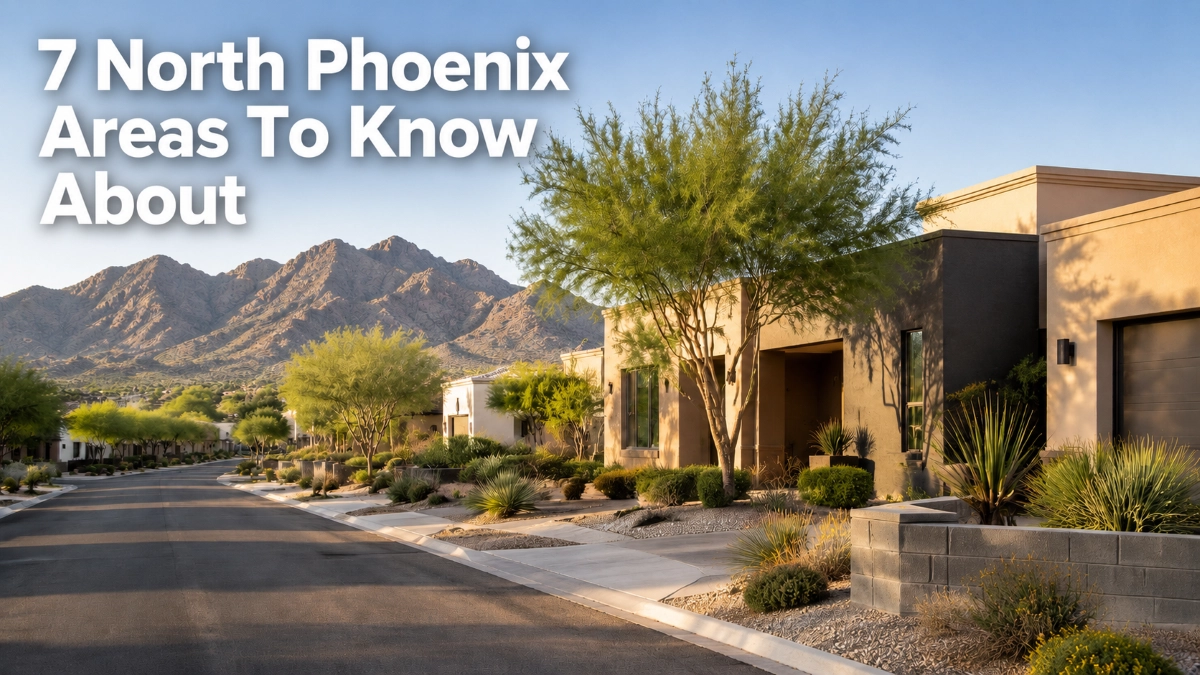
If you've spent any time house-hunting in North Phoenix, you already know the problem: the map makes it look simple, and then you drive it and realize every one of these areas has its own personality, its own price band, and its own set of trade-offs nobody put on the listing sheet.
I've been selling homes in this part of the Valley since 1999, and I've walked buyers through well over 1,500 closings — enough to know that the "best" neighborhood question is almost always the wrong question. The better question is: what does *this* buyer actually want their weekday mornings and Saturday afternoons to look like? Someone who wants a golf cart and quiet has a completely different answer than someone who needs a short commute and a backyard big enough for weekend projects.
So here's an honest walk-through of seven North Phoenix areas I get asked about constantly — Moon Valley, Norterra, Sonoran Foothills, Tramonto, Anthem, Desert Ridge, and Stetson Hills. Same format for each: what it feels like, what you'll typically find on the market, where it sits price-wise, how it connects to daily life, who tends to love it, and the one thing I think you should walk in knowing.
A quick note before we start: prices below are described in relative terms only — where an area generally sits compared to its neighbors — not specific numbers, because those shift by the month. And anything involving schools is stated factually only; I'm not in the business of ranking schools, and neither should any article claiming to help you buy a house.
And if you are considering a move to Phoenix, make sure to read this blog to find out everything you need to know.
The feel: Moon Valley is one of the older, more established pockets in this list, tucked against the base of the Phoenix Mountains Preserve in the North Central corridor. It reads less like a planned community and more like a real, lived-in neighborhood — mature landscaping, shade trees that actually provide shade, and a layout that predates the master-planned HOA era.
Housing styles: Mostly single-story ranch and split-level homes from the 1960s–1980s, plus a scattering of custom hillside builds with mountain views. Lot sizes tend to run larger than what you'll find in newer North Phoenix communities.
Price positioning: Generally mid-to-upper range for the area, with view lots and updated homes pushing toward the top of that band. Single family homes in 2026 range from $370,000-$1,8000,000. This of course depends how "loose" you want to get with Moon Valley boundaries. True Moon Valley starts closer to 600k.
Access: Close to Central Avenue and the I-17, with an easy run into Midtown and Downtown Phoenix. Shopping and restaurants are a mix of long-standing local spots and newer development along 19th Avenue and Bell Road. The Phoenix Mountains Preserve puts hiking trails within a few minutes of most homes.
Who tends to appreciate it: Buyers who want an established neighborhood over a planned one, people who value mountain access and mature trees over new construction finishes, and anyone commuting toward central or downtown Phoenix.
Honest trade-off: These are older homes. Expect to budget for updates — roofs, HVAC systems, and electrical panels that are original or close to it show up often in inspections here.
One of the best things about Moon Valley? There isn't just one. The few are: the older mature lots, true old style Phoenix streets which leads us to the amazing Moon Valley Christmas Light Drive throughs. You HAVE to check it out. Plus, there is Moon Valley Country Club. It's small town feel in a "big" city. Absolutely one of the most desirable areas if you aren't looking for a brand new home. Maybe Moon Valley sounds great....but, you want a home on a golf course? Check out all of these Phoenix homes for sale on a golf course.
The feel: Norterra is newer and more built-out-master-plan in character, sitting along the I-17 corridor north of the 101. It feels like a community designed around convenience — parts of it put a grocery run, a coffee shop, and a trailhead within an easy walk, though how close depends on which section you're in.
Housing styles: Primarily newer single-family homes built from the 2010s onward, along with townhomes and attached products closer to the retail core. Lot sizes are tighter than what you'll see in Moon Valley or Sonoran Foothills.
Price positioning: Generally mid-range for North Phoenix, with the newer phases and larger floor plans sitting higher. At time of this article being written, home prices range from $435,000 - around $1,100,000.
Access: This is the area's biggest selling point. Direct I-17 access, plus the retail hub at Norterra Parkway (grocery, restaurants, everyday shopping) essentially built into the community. Adjacent to the Sonoran Preserve for trail access without much of a drive.
Who tends to appreciate it: Buyers who prioritize a short commute via I-17, people who want retail closer to home rather than a strip-mall drive, and buyers who prefer newer construction with a builder warranty over an older resale.
Is North Phoenix a good place to live? Read what I had to say here. Want to learn more about North Phoenix? Hear from locals? Join the digital town square? Visit Living North Phoenix, the #1 community site for North Phoenix. And don't forget to join the Facebook Group too!
Honest trade-off: Lot sizes and privacy are the compromise for that convenience. If a large backyard or distance between neighbors matters to you, Norterra will likely feel tighter than you want.
The feel: This one's about the desert itself. Sonoran Foothills sits right against the Sonoran Desert Preserve, and the community is built around that — trail access, open desert views, and a layout that leans into the terrain instead of flattening it.
Housing styles: Primarily 2000s-era single-family homes, a range of one and two-story plans, many oriented toward desert or mountain views. Larger communities with several distinct sub-neighborhoods inside it.
Price positioning: Mid-range, with meaningful variation depending on lot location, view, and proximity to the preserve. Home values vary from $400k to $1,200,000 at time of this blog.
Access: I-17 access is a short drive rather than immediate, which is part of the trade for the preserve-adjacent setting. Some sections sit closer to nearby retail than others, so daily errands can mean anywhere from a quick hop to a longer drive depending on where in the community you are. Trail access, on the other hand, is about as good as it gets in this list.
Who tends to appreciate it: Buyers who hike or bike regularly and want that access without a long drive, people who want a quieter, view-oriented setting, and buyers who don't mind a bit more driving for daily errands in exchange for open space.
Honest trade-off: Depending on the section, you may drive more for groceries and daily errands here than you would in Norterra. Worth checking exactly how far the nearest retail is from the specific lot you're looking at, rather than assuming.
And let's not forget--one of the biggest factors to decide about moving to the North Phoenix area is the growth and expansion of TSMC. Read about them here and know what impact they are having on the area.
The feel: Tramonto sits north of Sonoran Foothills and functions almost as its neighbor's quieter, smaller-scale cousin — similar desert-adjacent setting, a bit more low-key, with less retail built directly into the community.
Housing styles: Single-family homes built primarily in the 2000s, generally similar in scale and style to Sonoran Foothills, with a mix of standard and view-oriented lots.
Price positioning: Comparable to Sonoran Foothills, and homes at the time of this article are 400k-900k.
Access: Similar profile to Sonoran Foothills — I-17 access is a drive rather than immediate, and daily shopping/dining means heading toward the retail corridors near Anthem or the 101. Trail and preserve access is a strong point.
Who tends to appreciate it: Buyers who want the Sonoran Foothills lifestyle at a comparable or sometimes softer price point, and people who prioritize quiet over built-in amenities.
If you are thinking of moving to Phoenix, make sure to check out our ultimate move to Phoenix guide.
Honest trade-off: Because it's less amenity-dense than some of its neighbors, buyers who want a community center, pools, or organized events as part of the package should look closely at what's actually included versus assumed.
The feel: Anthem is the most fully self-contained community on this list. It was built as a master-planned town from the ground up, and it functions like one — community center, parks, pools, golf, and a retail core big enough that many residents can go days without leaving the area for errands.
Housing styles: A wide range — starter and move-up single-family homes in the more established sections, larger homes in Anthem Country Club, and continued newer construction in outlying phases. This is one of the more architecturally varied communities in North Phoenix simply because it's been building for over two decades.
Price positioning: Wide range by design, from more accessible entry-level product to higher-end golf course and country club homes. Homes are available starting in the mid 300s all the way up to almost $2,000,000 in Anthem Country Club.
Access: Direct I-17 access, a large retail and restaurant base within the community, and its own outlet mall nearby. Community amenities (parks, pools, splash pad, golf) are extensive. It's a longer drive into central Phoenix than Moon Valley or Norterra.
Who tends to appreciate it: Buyers who want amenities and community infrastructure built in — HOA-run parks, pools, events — and anyone who'd rather stay local for most errands and recreation than commute for them.
Honest trade-off: HOA presence is significant here, which some buyers love and others find restrictive. If you don't want deed restrictions dictating what your front yard or RV parking situation looks like, that's worth clarifying before you write an offer.
Blair's Pro Tip-Anthem is super desirable for those wanting a master planned community, away from the City, with an amazing park, and that much closer to begin your travel for a weekend trip up North :-)
The feel: Desert Ridge feels urban-adjacent in a way none of the other areas on this list do. It's dense, walkable in parts, and built around one of the largest retail and entertainment destinations in the Valley. This is North Phoenix with a city pulse rather than a desert-quiet one.
Housing styles: A genuine mix — single-family homes, townhomes, and a significant amount of condo and apartment-style product, particularly closer to the retail core. Housing stock here skews newer, mostly 2000s and later.
Price positioning: Wide range depending on product type, with attached and condo products generally more accessible and larger single-family homes running higher. Homes vary from the high $400s to the just under $2,000,000s.
Access: Excellent, and among the strongest on this list. Direct access to the 101, close to the 51, and the Desert Ridge Marketplace and Kierland/Scottsdale corridor put shopping, dining, and entertainment minutes away.
Who tends to appreciate it: Buyers who want walkability and retail/dining density, people who split time between North Phoenix and Scottsdale, and buyers prioritizing freeway access over quiet or lot size.
Honest trade-off: Density cuts both ways. If you want space, privacy, or distance from traffic and retail noise, Desert Ridge will likely feel like the wrong fit — this is a trade you make on purpose, not one that sneaks up on you.
Blair's Pro Tip-Residents and people traveling through Desert Ridge; i.e. Tatum and the 101 interchange will almost always complain about traffic. Desert Ridge is one of Phoenix's most convenient locations. But if you have to go through that area, you will almost always have to deal. As I mentioned above, if you are looking for spread out homes on bigger properties-Desert Ridge overall might not be the best fit. You are though close to The Marketplace, an area with convenient shopping, a new Trader Joes and so much more.
The feel: Stetson Hills sits within the North Phoenix corridor along I-17, reading as a quieter, more residential-focused pocket — less built around its own retail core, more built around straightforward, well-kept streets.
Housing styles: Primarily single-family homes from the 2000s, generally mid-sized lots, with a fairly consistent architectural style across the community compared to some of the more varied areas on this list.
Price positioning: Generally accessible-to-mid-range for the North Phoenix corridor.
Access: I-17 access is close by, and daily shopping/dining generally means a short drive to Happy Valley Towne Center, Norterra Parkway, or the broader Happy Valley corridor rather than in-community options. Parks and community amenities exist but are more modest in scale than Anthem's or Norterra's.
Who tends to appreciate it: Buyers who want I-17 access and an easy drive to Happy Valley-area shopping without paying for a heavily amenitized master plan, and buyers who prefer straightforward, low-key streets over a community built around its own retail core.
Honest trade-off: Because Stetson Hills doesn't have much retail built directly into the community, buyers should treat "a quick drive to Happy Valley Towne Center or Norterra" as a real factor in daily life, not just a nice-to-know — know what's actually a five-minute drive versus a fifteen-minute one.
Blair's Pro Tip-Stetson Hills/Valley--one of my most favorite areas in the entire Phoenix metro. Why? Not sure. I love the home styles, area, being away from stuff but not in the middle of nowhere. Maybe it's the name. I love it here.
Here's the honest answer: it depends on what you're optimizing for. Commute time, lot size, HOA tolerance, walkability, and preserve access all pull in different directions, and no single one of these seven areas wins in every category. That's normal — it's also exactly why "just tell me the best neighborhood" is a harder question to answer well than it sounds.
If you want to talk through which of these fits your specific list — commute, budget, lifestyle, the whole picture — reach out and I'll walk you through it directly. I've sold homes across every one of these communities, and I'd rather spend twenty minutes with you up front than have you find out after closing that you picked the wrong trade-offs for how you actually live.
I am a phone call away at 480-233-6433. Reach out--I am one of the most connected North phoenix agents and residents.
Are there other North Phoenix subdivisions or areas?
YES! These are just 7 of them.
What is considered North Phoenix?
Ask 100 people and you will get 100 answers. I say it is Shea Boulevard and north, and all of the above mentioned areas are in North Phoenix.
Will TSMC cause North Phoenix home prices to skyrocket?
Skyrocket? Not in my opinion. Go up? Yes. Over time
How far is North Phoenix to Sky Harbor Airport?
It depends where. Moon Valley is 15ish mins away. Desert Hills could be 45ish.
Why hire Blair Ballin? Licensed since 1999. No BS. Honest feedback and very connected. Talk to ya soon